

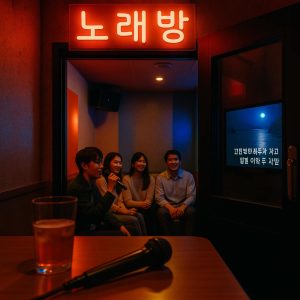
 On a weekend night in Jeju City, the neon lights of karaoke bars flicker against the sea breeze. Groups of friends pour out of seafood restaurants and duck into noraebang rooms, private karaoke booths where music and laughter spill into the hallway. It’s a familiar scene across Korea, but Jeju’s karaoke culture carries a rhythm of its own. Here, venues like Jeju Island karaoke lounges (제주도 가라오케) capture that local pulse — where song choices, atmosphere, and playlists together tell a quiet story about how the island’s music scene is evolving.
Where the island sings
Jeju’s noraebang culture began much like the rest of Korea’s, as a space to unwind after work or celebrate with friends. Over time, it has become more than just entertainment. For many locals, it’s an outlet for creativity and identity.
“Singing is how people here express emotion,” says Park Jihun, who owns a karaoke bar in Seogwipo. “We’re surrounded by nature, mountains, ocean, and music is another way we connect to that feeling.”
Inside Park’s bar, the usual K-pop favorites still dominate: IU, BTS, NewJeans. But tucked between the hits are names that surprise visitors, such as Jeju-born indie artists like 9 and the Numbers or singer-songwriter Kang Asol. “A few years ago, you wouldn’t find these in karaoke songbooks,” Park says. “Now, customers ask for them.”
Locals vs. tourists: two playlists, one island
Jeju draws millions of tourists each year, and the karaoke rooms are one of the few places where locals and visitors share space after dark. Yet their song choices reveal two very different worlds.
Tourists often treat karaoke as celebration. They go for upbeat K-pop anthems, nostalgic 2000s hits, or English-language tracks they can belt out after a few drinks. Locals, on the other hand, tend to pick slower, emotional songs and ballads that echo Jeju’s calm, reflective mood.
“There’s a big difference,” says Kim Hyerim, a university student from Jeju City. “When my Seoul friends visit, they sing EXO or TWICE. But when we go with locals, we sing Yoon Jong-shin or indie Jeju artists. It’s not about performing. It’s about sharing a mood.”
That difference reflects more than just taste. It’s part of how the island preserves its identity amid the constant flow of visitors. “Tourists bring their city energy,” Kim says. “We bring our island rhythm.”
The rise of Jeju musicians in karaoke books
The inclusion of Jeju-based musicians in national karaoke catalogs didn’t happen overnight. Companies like TJ Media and Kumyoung, Korea’s two largest karaoke system providers, update their libraries monthly. In recent years, they’ve started adding more regional artists, responding to demand from both locals and tourists seeking authentic Jeju songs.
One of those artists is Kang Asol, a Jeju native known for her airy voice and poetic lyrics about island life. Her song “To the Sea” appeared in karaoke songbooks in 2022 and has since become a quiet hit. “When I first saw my name in the karaoke list, it felt surreal,” she says. “Growing up, karaoke was how I learned to love music. Now people are singing my songs in those same rooms.”
Her success has inspired other Jeju artists to see karaoke as a meaningful milestone, a sign they’ve entered the public’s everyday soundtrack. Local music festivals, such as the Jeju Indie Music Festival and Tamna Music Week, now feature acts whose songs later show up in karaoke systems.
“It’s a feedback loop,” says Park. “People hear local artists live, then sing them in karaoke, and that keeps their names alive.”
Karaoke as a cultural bridge
For Jeju, karaoke does more than entertain. It bridges generations and communities. Elderly islanders still sing trot, Korea’s classic, sentimental genre, while younger audiences shift between indie ballads and K-pop. In a single evening, you might hear an 80-year-old singing Nam Jin’s “Empty Glass” followed by a teenager crooning IU’s “Through the Night.”
This mix reflects Jeju’s broader musical landscape, one that values both roots and reinvention. “Music on Jeju always carries a sense of place,” says Kang. “Even if the style changes, the emotion stays the same: longing, memory, connection to nature.”
Tourists, too, get drawn into this emotional current. Many karaoke bars keep a few Jeju-themed songs on their “recommended” list, from folk tunes to modern interpretations. “Foreigners love trying songs about the sea or wind,” Park says, laughing. “They may not know the words, but they feel the mood.”
The future of the island’s sound
Jeju’s karaoke scene is evolving alongside its music industry. As more independent studios and small venues open on the island, the line between performer and audience continues to blur. Locals record songs in home studios, upload them online, and sometimes end up in karaoke machines within a year.
Technology is also changing the experience. Some bars now use smartphone apps where guests can request songs not yet in the official system, often featuring new Jeju artists. “It’s becoming a testing ground,” Park says. “If a song gets sung a lot, that tells us it resonates.”
What’s striking is that Jeju’s karaoke culture hasn’t lost its intimacy, even as it modernizes. Behind every song choice lies something personal: a memory, a place, a person. And when the microphone passes from one hand to another, the island’s sound keeps shifting, note by note.
As the night fades and the last chorus echoes through the narrow alleys, Jeju’s noraebang remain what they’ve always been—small rooms filled with big feelings, where locals and visitors alike find a way to sing their connection to the island.